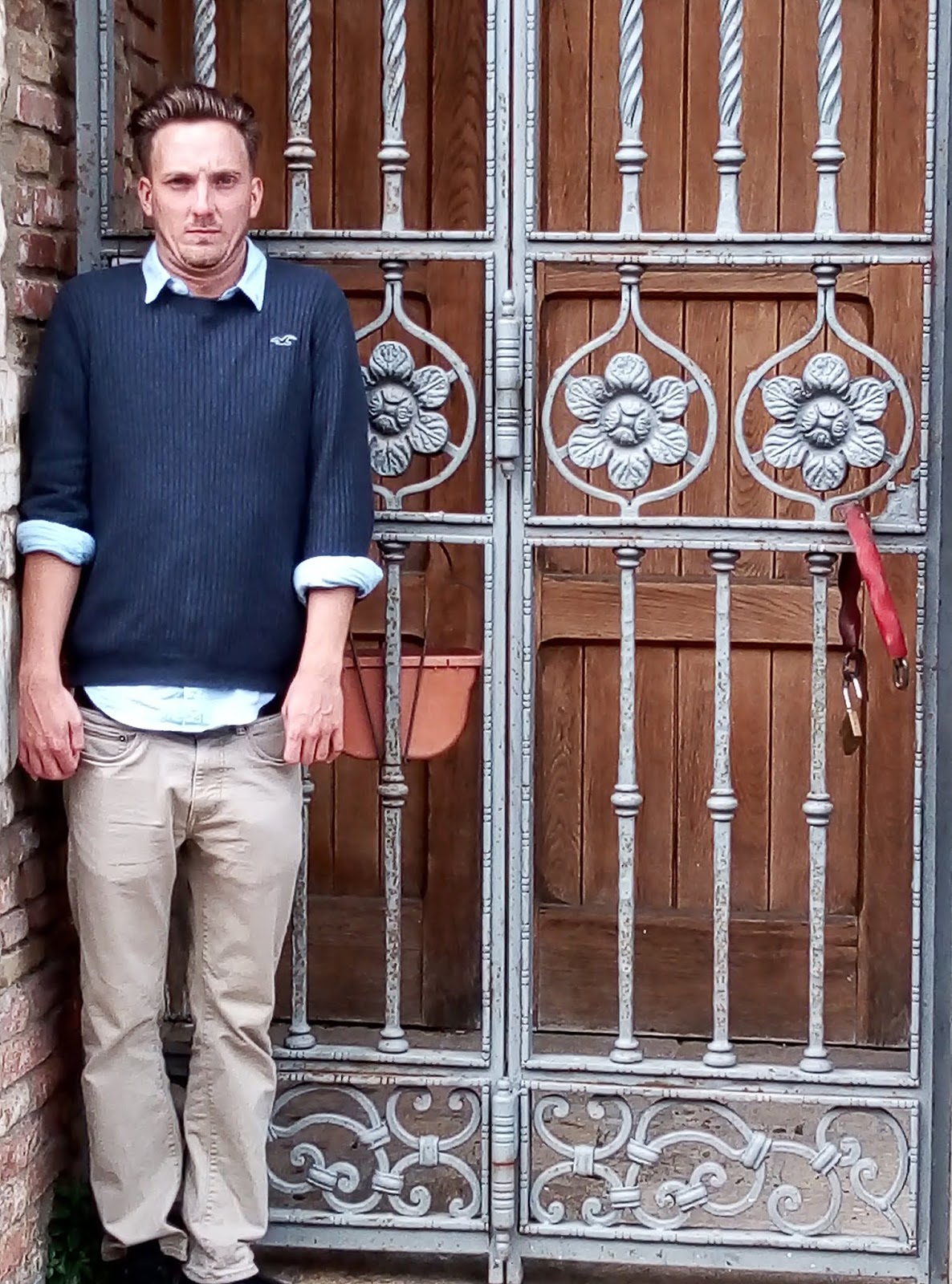
Friday, 24 January 2020

Diet, exercise, Hampton Court

So far the diet is going really well. I skip breakfast which is quite a sacrifice, but I have suspected for a long time that the small amount of muesli or banana I eat in the morning could be tipping the balance towards me gaining weight.

There is a NO SNACKING rule which the doctor is very stern about. If you need to snack, he writes, you should just drink water. You need nothing between meals. Your stomach is designed to go a long time between meals and you won't even feel hungry after the first few days. I think this is true. So far I have lost 3-4 pounds and some of it is off my double chin!! A visible difference. He predicts I will lose much more in the first week than I have but I think he must be predicting for men who burn calories faster. Few people burn calories slower than the post-menopausal woman, even very active ones. Went to another exercise class yesterday - arms and weights apart from the usual squats and abs exercises. Very good. The day before was a Hampton Court day.

Both Ichiho and Hilary were there and the tasks were to load the melon beds - the hotbeds - with compost or to move some semi-rotted compost from one bin to another. Chris and I did the first task which involved lots of loading and wheelbarrowing. Really, we work hard at HCP but of course, it's only for a short time. In winter we go home early so it's only three and a half hours of actual work and in summer it's four and a half hours. It can be a long afternoon in the summer.
We moved nearly all this to the melon beds.

Nasty stuff and not composting at the mo - too cold
Unfortunately, we tried to fill three of the beds instead of two but we hadn't moved too much stuff to the wrong bed. It won't take them long to rectify our mistake! Itchiho and Hilary both seem pretty fed up with the hotbeds which they have spent hours digging out. Hilary is getting some horse manure to boost the compost.

This is a pic of the new mound in the Magic Garden where we put some of the spent soil from the melon bed. The magic gardeners are still working hard on their landscaping.


Monday, 20 January 2020

The River is Up

We have had so much rain that the river was on red boards (Caution strong stream) last weekend and today the river was deemed too dangerous to row on, so my friends went for a walk and I went to the Legs, Bums and Tums class that does me good on a Monday morning.

I felt very FAT so I started a diet today. It was inspired by an article in the Saturday Times about how to lose weight fast because you are heading towards being diabetic. I think I need to do this 800 calories a day diet or I will have to live with all this excess weight and I am beginning to find it a real problem. Can't bend over without gasping! I have always lost weight before if I wanted to. Post-menopause it seems so much harder. One of the problems is my lack of vanity. Before I was terribly aware that I needed to look as good as I could and I was ridiculously vain. Post-menopause I feel I'm too old for anyone to lech over and I can I either be a skinny old lady or a fat old lady and it hardly matters which. EXCEPT for health reasons and exercise reasons - in that I feel too heavy and cumbersome to exercise well.

Last week I went to meet the other skiffers in a cafe after their walk, but they weren't very friendly to me so I didn't bother today.

This weekend we entertained friends whom we had not seem for many years, and the husband was a very old friend of my husband but I didn't really know much about the wife apart from that she was pleasantly chatty and quite unusual in that she's very earnest and has no sense of humour. She is one of those people who finds an oblique way of criticising you to your face, which is quite funny. As we were shopping she made a remark about thick fluffy towels which made me realise that I had lent them towels which were not at all up to the mark! She also said "Isn't it lovely when you've washed your hair in the morning and it feels all lovely and fresh" and she must have known I had not washed my hair, but she implied that I should make a habit of it. She gave me a tip for making salad dressing and I realised she was mildly disappointed that we had not served any raw veg the night before because she is a vegan food nut. She believes that eating the right food can cure every kind of inflammation, and she has some proof of this because her mother came to live with her and the family about ten years ago and was at that time suffering with rheumatoid arthritis amongst other things and the family eating regime was foisted upon her with the result that she lost loads of weight and all her ailments cleared up. But then alas, she got vascular dementia and died anyway! I asked my friend if her mother had expressed dismay at the lack of cake etc, and her enforced weight loss, and she said, no, her mother was very "compliant". Compliant!!! My mother would have shouted the house down, which is why I never seriously suggested having her to live with us (of course I suggested it but I was not upset when my OH vetoed the idea. She was always rude to him.)

But my friend was interesting to be with because she is so different from me, and all her oblique criticism is meant to be kind in a life-coachy, you can do better than this, sort of way.

Thursday, 16 January 2020

My sense of smell came back

My sense of smell came back slowly. First I noticed I could smell coffee, and then I noticed other things. At first some of the smells were the wrong smells, for example, my body still smelled of celery. Also, last summer I found I could smell many musty plant smells which I couldn't before, so I was continually sniffing and saying "what's that smell?" and wanting to track it down to some bush or other like a bloodhound. I found it very entertaining. It was a long time before I could smell all the smells, for example, smelling bleach took quite a long time, but now I find it a terribly strong smell, I can smell it from yards away. And I can smell shampoo! How lovely!

I told my hairdresser about this. She told me that her sister had a terrible accident to her head, and lost both her sense of smell and her sense of taste, which is a real affliction. My hairdresser says recently she has noticed her sister sniffing at things in a puzzled way. I do hope it means she is recovering.

I think that it was the blow to my upper lip that temporarily damaged my sense of smell, although I can't find it written anywhere that this is possible as the olfactory nerves are not located there.

Return to the book group - This is Going to Hurt by Adam Kay

I stopped going to the book group because the other readers were so annoying, so unable to appreciate literature, but the person who runs it is not annoying, but the reverse, the sort of person who soothes one's nerves. I finally caught up with the book groups because they chose Adam's Kay's autobiographical book about working as an obstetrician in the NHS - This is Going to Hurt.

The book group was composed of the same elderly people that went to it before, so I knew all the faces except two - another elderly gent and a woman who has had a stroke and comes in a wheel chair. At the end her carer came to wrap her up and take her home.

First of all, the elderly people doubted that the book was true. They agreed that the NHS gets overwhelmed but this is surely because the population is ageing. Why then, does this affect obstetrics?

The men said the book was not for men. They do not like reading about the things that affect women's bodies. "Revolting." It's very interesting that the men in the book group radiate their feeling of pride in masculinity, as though being born male was such a huge achievement they hardly have to do anything else to prove themselves. (Why have the women in their lives not questioned this? I think it is maybe because men who served in WW11 deserved recognition for their efforts, and then this carried on when men did National Service. - call ups ended in December 1960. In 1963 the last of the National Servicemen left the army. Only after this did this "men are wonderful" mindset start to change.)

The group agreed that the NHS is badly run. For example, the NHS sends its patients for private operations, which it pays for. All agreed that this is a stupid waste of money. It's possible because they have private health insurance and think NHS patients should not get the same treatment as those who pay. They also tend to the belief that the people from other countries come here for medical treatments which they are not entitled to, having never paid their National Insurance, and they are never charged. I said that this is not possible any more, but they said they think it happens all the time.

The group believed that the government is making a false economy by stopping the bursary for training nurses, not providing nurses and hospital doctors with accommodation, and the nurses should also get free food in the staff canteen.

Examples of waste in the NHS includes their refusal to take back Zimmer frames and walking sticks which have been used (apparently they are too expensive to clean. Couldn't you make a large steriliser and do it easily?) There was a long digression into using Freecycle and how it works - also what the Red Cross can provide you with if you are in need.

Self-inflicted injuries - the group agreed that patients should pay to have objects removed from their rectums.

I suggested that there were three areas which in this account of a junior doctor's work are really shocking:

1. He was often far too tired to be responsible for a department full of patients. If another doctor was ill there was no cover available and he might have to work for 24 hours at a stretch.
2. The Consultants who were senior to him were no practical help at all, and this is WRONG.
3. The training method is "see one, do one, teach one" and this is NOT TRAINING or not enough training.

Everybody agreed that this was really wrong and shocking but they are secure in the knowledge that the Conservatives are in power and it will all be sorted out. "Boris is very clever" they say, misty-eyed.

Many of them said the book was not true, it was just for a laugh. The swearing was awful, really awful. The writer is gay. Hmmm.

Marks - all 7 and 8 out of 10.

I was trying to work out if they are all able to "go private" and I think about half of them are. They really don't care about what's going on outside their own lives. It is very depressing.

Thursday, 3 October 2019

An Honourable Deception? New Labour, Iraq, and the misuse of power by Clare Short Part 1

I seem to have had this book on my shelf for ever. The fact is, if I have bought a book second -hand  (- I bought this second-hand) I don't feel any rush to read it. Something about the price.

The beginning is pretty boring. Clare has no snappy turns of phrase. Her prose plods along. She gives us a potted history of her early life at home and in the Labour party, and also explains what it was like to be a serious-minded woman in a parliament where men such as Alan Clarke, an appalling old misogynist, turned up drunk and played for laughs. "I objected and told the Speaker I knew we weren't allowed to say another member was drunk [why on earth not?] but there did seem to be a problem." The papers all reported that she had wrongly accused the minister of being drunk.

"I remember being horrified at the fawning attitude Tory M.P.s adopted to their ministers and particularly to the Prime Minister."[Mrs Thatcher. The Tory Party constitution is very hierarchicial and the M.P.s are forced to toady if they want to get promotion. Everything depends on what he/she thinks of them. Mostly it works as it suits the Tory personality, but recently, under Mr Johnson, it does not work as his behaviour in sacking 21 democratically elected M.P.s is not acceptable or precedented, and yet they dare not call him out.]

She was clearly a very dedicated constituency M.P., trying her best to ease a way through the problems of the people who come for her help. During this time, in 1983, Mrs Thatcher's divisive politics meant that there was high unemployment and deep divisions. Like all Labour politicians then, Clare had a passionate commitment to equality of opportunity and ending race and sex discrimination which was opposed by the Tories at the time. She points out also that Labour has a strong libertarian tradition - they are not communists - they believe in free elections and the rule of law. They did not want to nationalise all the industries either, but thought it right that the utilities - gas, electricity, telephones and water - should be in public ownership becaue they are crucial to basic wellbeing. The model is called "the mixed economy".

But back in 1983 the party was being torn assunder by the Trotskyist "militant tendency". Clare was probably quite tolerant of the zealots. She thought of the Labour party as a broad church, but gradually the membership moved against the extremists and most of the Labour M.P.s began to understand that the church had to have walls. The miners' strike from 1984-85 was a bitter dispute that caused a great deal of suffering and pitted the Southern police against the Northern miners in pitched battles. Clare read about the mining industry and realised that change must come to it as they used antique pits and methods, but judged that the change was being managed brutally by the government. Then came the print unions' dispute with the Murdoch newspaper offices' move to Wapping, an equally brutal and mismanaged change.

[All this happened when I was in my early 20's and I knew a tough young Met policeman who liked the action up in Yorkshire, fighting the miners. I was against it because I know the North and the South are one nation. I was brought up to admire the laconic grit of the North. The odd thing is that the awful divisions were just as shocking as things are now, if not more so, but when you are young I suppose it doesn't depress you quite as much. I was depressed in my 20s but I thought it was because of personal things that had happened in the past, which was probably partly true. I wasn't brought up to have a strong psyche, but I guess I was also depressed by all the events reported on the news and in the papers. It seemed that there would be no end to it all.]

The Labour Party had to change and Clare was elected to the National Executive Committee of the Labour Party. This body supervised the development of policy and the administration of the Labour Party and in the ten years that Clare served, and they reformed all the old policies and had the necessary task of expelling the Militant M.P.s from the Labour Party. They supported Neil Kinnock and John Smith, successive leaders, in making the party electable. The most contentious item was Unilateral Nuclear Disarmament. When Neil Kinnock went to see Ronald Reagan to demonstrate that he could be treated as a future Prime Minister, he was snubbed over unilateralism. Policy was changed. Labour stayed with its commitment to nuclear disarmament but gave up the unilateralist element  - they would barter the weapons in order to secure disarmament from others.

Clare was hounded and bullied by the Sun newspaper for opposing their printing daily pictures of naked women (some very young) on page 3. She found it coarsening and degrading to society as a whole.

Mrs T was forced out of office in 1990 after the mistakes of the Poll Tax policy and the resignation of Geoffrey Howe. The next election was in 1992 and by then Labour was in a much better shape to present a credible opposition. Clare resigned from the Shadow front bench because she wanted to speak against the first Gulf War, whereas the Labour Leader, Neil Kinnock, wanted her to be silent. She resigned in order to say that after Saddam Hussein had been driven out of Kuwait we "should seek the removal of all non-conventional weapons - nuclear, chemical and biological - from Israel, Syria and Iraq. She said we should also settle the Palestinian issue by giving the Palestinians their state based on the West Bank and Gaza".  She was clear that Saddam Hussein must be made to withdraw from Kuwait, but wanted to speak about foreign policy throughout the Middle East.

Clare resigned from the Labour front bench three times but each time the Leaders understood that she was defending her principles and were not slow in promoting her again.

In the 1992 election Labour won a larger share of the vote but the Tories won with a reduced majority. One of the features was the large Labour rallies where members were bussed in to "adore" the Leader. Clare did not attend these rallies. She spent her time contacting voters in her own city of Birmingham. On the day of the election the Sun's headline ran: If Neil Kinnock wins today, would the last person to leave Britain please turn out the lights? On the next day it published the headline It was the Sun wot won it. Clare Short believed that these headlines caused the soon-to-be leader of the Labour Party, Tony Blair, to court the Sun and give its owner, Rupert Murdoch, access and political favours, although she did not believe the Sun's actual influence was as great as Blair thought.

The News of the World smeared Clare because she had campaigned for justice and against corruption in the West Midlands Serious Crimes Squad. She complained to the Press Complaints Commission and the scandal-sheet was forced to print the adjudication in a full page. At the same time Clare's husband was dying of early onset dementia - eventually failing to recognise her. His illness began in 1980 and progressed into strange and inexplicable behaviour, then a sad decline, and he died in 1993.

Before Tony Blair, the Leader was John Smith, a popular and beloved Labour politician. He asked Clare to work on women's representation in the Labour party. Clare tried to build a party that was more women-friendly, and this seemed to her to make the whole organisation more open and enabling. She knew that fewer people than ever before were willing to involve themselves in party politics and that the quality of local councillors and M.P.s was deteriorating. Led by the NEC, Labour worked hard to draw a much wider range of people into the party and to offer political education and training in how to chair meetings, speak and organise. They wanted to renew the party and make it a means of empowering local people to become active politically and improve their community.

John Smith died in 1994 much to the sadness of the Parliamentary Labour Party. He was a team player and also won the confidence of the electorate, according to polls.

His deputy, Margaret Beckett stood for leader and Clare supported her and helped with her campaign. Other runners were Tony Blair and John Prescott. Clare did not believe that Blair had real Labour values at heart, but knew that most of the cabinet would vote for him because they felt his was the face that could win Labour an election. John Prescott was voted Deputy Leader because the Party believed that his strong Labour values would anchor Tony Blair. Gordon Brown and Tony Blair were both "Modernisers" and decided amongst themselves that Blair would stand as leader. He won with 57 per cent of the vote.

Blair immediately decided to rewrite Clause 4 of the Party's Constitution which stated the Party was committed to the public ownership of industries. Clare helped with some amendments to the redraft and argued the case for change at the NEC. Blair sent her a handwritten thank you note.

She was elected to the Shadow cabinet and Blair gave her the brief for transport. She did the necessary research and worked for a year preparing a considered and serious transport policy. Rail privatisation was very unpopular in the country but Blair and Brown did not want to commit to renationalisation. All the work Clare did was pushed to one side and Blair offered her a job in Overseas Development instead.

As well as the shift to a media-dominated system of decision-making, Blair moved rapidly away from Labour's tradition of collective policy-making. Policy had been made by sub-committees of the NEC, was considered by the NEC who put it forward to Conference. It was therefore thoroughly thrashed out at every stage. Under Blair, Labour moved to policy being decided by the leader and his entourage, collective decision-making being marginalised, but an expectation of total loyalty to the line laid down. This must have been an endless torture to Clare, She had worked on the NEC, examining and making policy for many years, long enough to know a sound policy from a faulty one. She had become something of an expert in collaborating intelligently. Suddenly she was expected to seem enthusiastic about policy that had not come through the proper channels, which had been dictated in a hurry by an inexperienced pair of men who were interested mainly in how the story would play in the press, and which she had no faith in.

She was lucky to get the International Development brief because Blair didn't take much interest in it. In 1997 Labour won the election and I will report on the Iraq part of the story in Part 2

Tuesday, 1 October 2019

I don't bother

Yesterday a woman called Pat tried to be friendly to me at coffee by telling me how it was possible to misjudge people when you first meet them. This lady Pat and I have history.

This is because I did misjudge her when first met her. She came in a large group of new starters and she was the one who engaged the others in conversation when she should have been helping to move the boat. The boats are heavy and we all help to lift them. I thought of her as "the woman who thinks everyone else should carry the boat for her". Anyway, it turned out she had all sorts of things wrong with her and she was medically unable to move the boat. (She was able to row it though, after a fashion.) As time has gone on, there are more members who are not well enough to lift the boat because they have problems you can't see, like osteoporosis. When they play a part in the club you forgive them for the things they can't do, and admire them for the things they do do, or you think about how lucky you, personally, are, that anno domini hasn't caught up with you yet.

On another occasion she decided to obliquely "tell me off" by talking about people at the club who weren't friendly to her when she first came along and how certain other people her had come to her rescue when she was going to give up. I could tell by her look that she meant me amongst the "bad" club members. I didn't really care. It seemed to me then that the club, which is a sports club, was getting very full of people who don't really do the sport. Now I am more appreciative of people who just like to come along.

Anyway, she was charming and tried to engage me on this subject, obviously expecting that I should share a confidence with her. I said "I am a very bad judge of people. I nearly always misjudge them." and I thought of friends that I had lost because they were the wrong friends, who didn't value me at all. I could have told her about these friends whom I knew when I was young but I think it is still too personal to share. I keep myself to myself. And I thought about what I was trying to write about and how damaged I am and how you can't exchange that in a coffee and chat session. Pointless. But I also thought about how often thoughts are too complicated to share with other people.

When my children were under 10 I used to tell them all my complicated thoughts. We lived in the country and I had no friends I could talk to.  Once F said to me: "Mummy you're talking to me like I'm a MUCH OLDER CHILD!" "Oh, am I?" I said. I tried to work out if I was doing her any harm, if the subject matter wasn't suitable. I thought whatever I was talking about wouldn't do her any harm, and then I carried on regardless.

Monday, 9 September 2019

Italian holiday

This year we had an interesting time in Umbria and Tuscany. I didn't take many pictures because I have a new phone - a Huwai Honor and it is all very well, except for the camera. The camera makes everything dull and grey. I have to edit every pic to turn up the brightness and the colour, and even then the pics are not nearly as good as they used to be on the Samsung. Now I find that I could have used the Samsung as just a camera but I can't find it so I must have taken it to the recycling centre. I can't believe I did that.

Anyway, here are some pics showing metalwork in some of the towns we went to - like Cortana. I let the others take pics of the views and so forth because their cameras are better.


Caged windows


I think this might be Perugia

This is definitely Siena

Siena - a hook in the form of a sheep
You can see that the Italians have a fine tradition of metalwork being decorative as well as functional and they still have that. Nearly every apartment we stayed in had something interesting in its fittings that you wouldn't have found in the UK.

These are things that I valued about Italy:

  1. No Starbucks or Kentucky Fried chicken or any other familiar tackiness. I think they have McDonald's but not in the historical towns we visited.
  2. The other side of the coin - the cafe/bars we visited were individual businesses.
  3. Plenty of parking on the edge of towns or under the cities - some with escalators into town.
  4. Pedestrianised town centres - these places were built long before the car and it is a good idea to keep cars out - with the exception of Florence. We caught buses into Florence. 
  5. Recycling receptacles everywhere.
  6. Valiant bicycling in the face of many dangers.
  7. No Brexit.
  8. Good quality buildings in the traditional designs with good materials, warm colours - ochre, terracotta, sienna!
  9. Ironwork - doorcovers very elaborate
  10. Artisans making goods in their workshops. We saw a man making a mosaic picture from polished stone - which turned out to be way above our price range. Lovely, though.